
Climate-resilient mixed forest for Saxony: Afforestation in Oberlungwitz
On November 22, 2025, we were back in Oberlungwitz (municipality of Bernsdorf) in the Zwickau district. Together with the Schutzgemeinschaft Deutscher Wald (SDW) Saxony, we reached an important milestone: the initial afforestation of a 2-hectare area, which began in spring, is now complete. A total of 8,375 trees have been planted. This new climate-resilient forest will grow to strengthen the region in the long term.
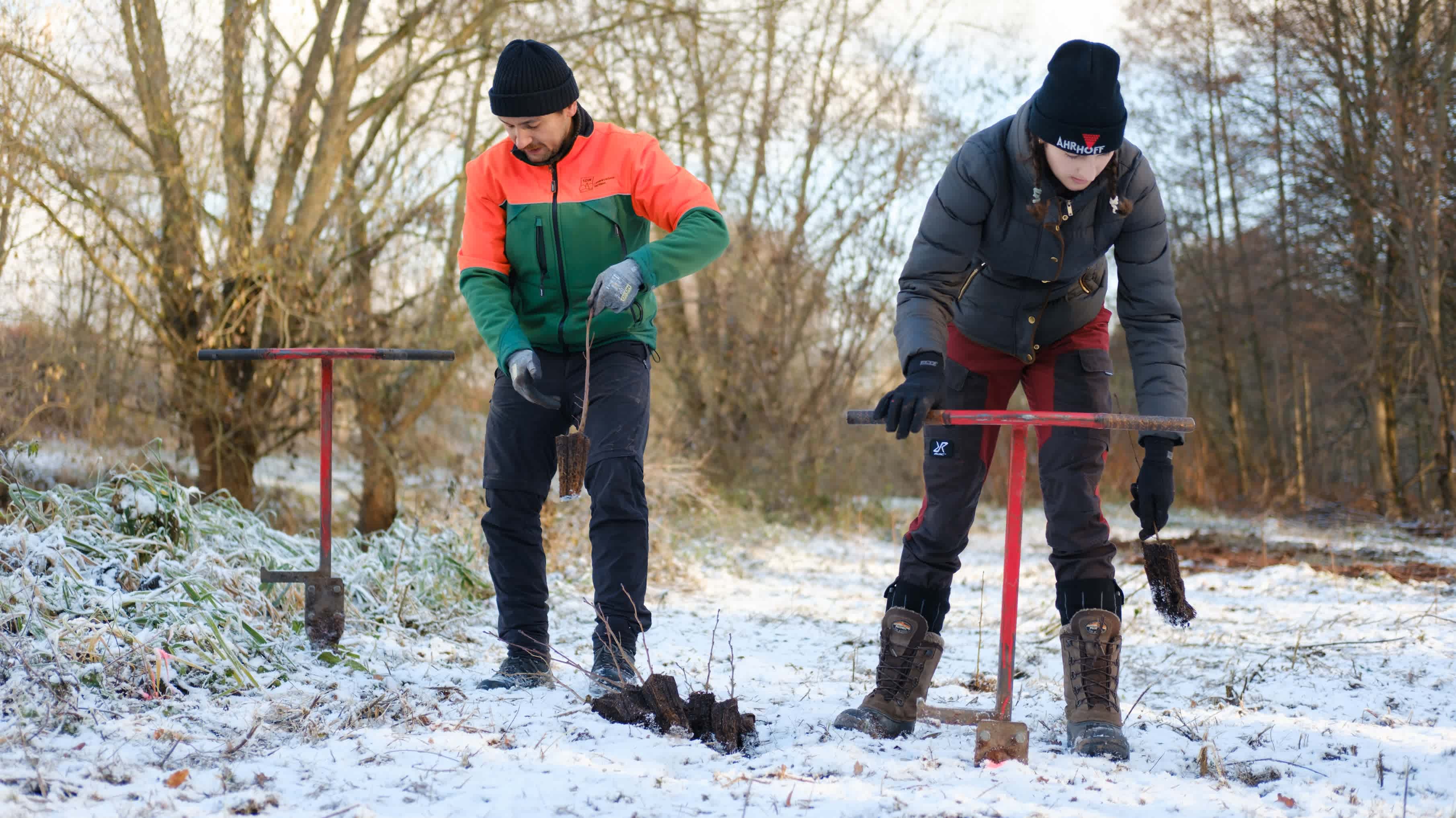
Afforestation is a team effort: Friedrich from the SDW and a local volunteer work on the snow-covered meadow.
A Sunny Winter Day for 500 New Alders
The afforestation day showed off its best side: hoarfrost, blue sky, and bright winter sun. Full of anticipation, we set off from Berlin to Saxony. On site, we met Henrik Lindner and Friedrich Findeisen from SDW as well as local volunteers. With warm drinks and small snacks in hand, we headed to the planting area.
After a brief introduction, the work began: at the pink-marked spots, we used the so-called “handlebar tool” to open the soil, planted the young alders, and pressed the earth down. Despite a light snow cover, the soil was loose and easy to work – perfect conditions for the last 500 red alders, completing this year’s planting section.

Henrik Lindner from the SDW explains the planting technique: holes are made with the ‘handlebar tool,’ then seedlings are placed into the ground and covered.
Why Alders? Climate Protection Along Waterways
The area planted in November lies directly along a natural stream meadow, a location that is difficult to protect with game fences. Red alders are ideal here because they are resilient to browsing and contribute to the health of the water: their leaves act as a natural filter, stabilize water quality, and create new habitats.
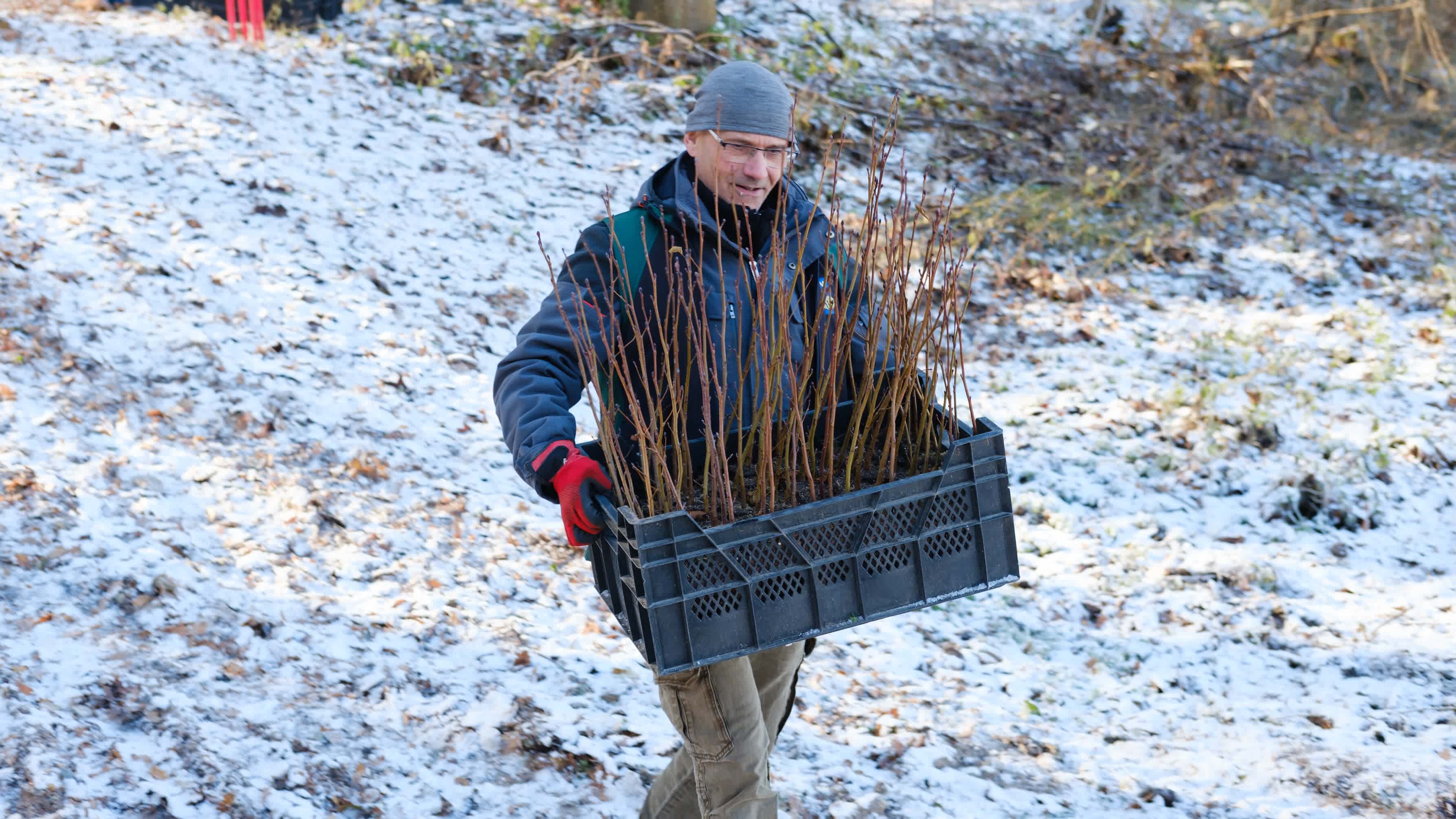
A volunteer carries a basket full of young red alders down the slope to the planting area – ready for the next round of reforestation.
A Mixed Forest Strengthening Climate, Soil, and Flood Protection
During a tour with Henrik Lindner, we received a small update on the development of the area that was planted in spring. The young mixed forest has established well overall: many elms, oaks, and cherries have grown despite the very dry summer. At the same time, some spots showed higher drought stress. SDW plans targeted replanting in these areas next spring to maintain diversity and fill gaps.
This interim summary shows that afforestation is not a one-time act but a long-term process of planting, caring, and adjusting – to create a forest that remains stable in the long term.

A shared view of the area reforested in spring: Henrik from the SDW explains the current condition of the stand.
A New Forest for a Resilient Saxony
With a total of 8,375 trees planted on 2 hectares, a forest is growing in Oberlungwitz that will bring long-term benefits to the region. It protects the climate and soil, strengthens biodiversity, and improves flood resilience. And it shows what is possible when people take collective responsibility for our future.
Many thanks to SDW Saxony and all the dedicated volunteers who made this day possible!
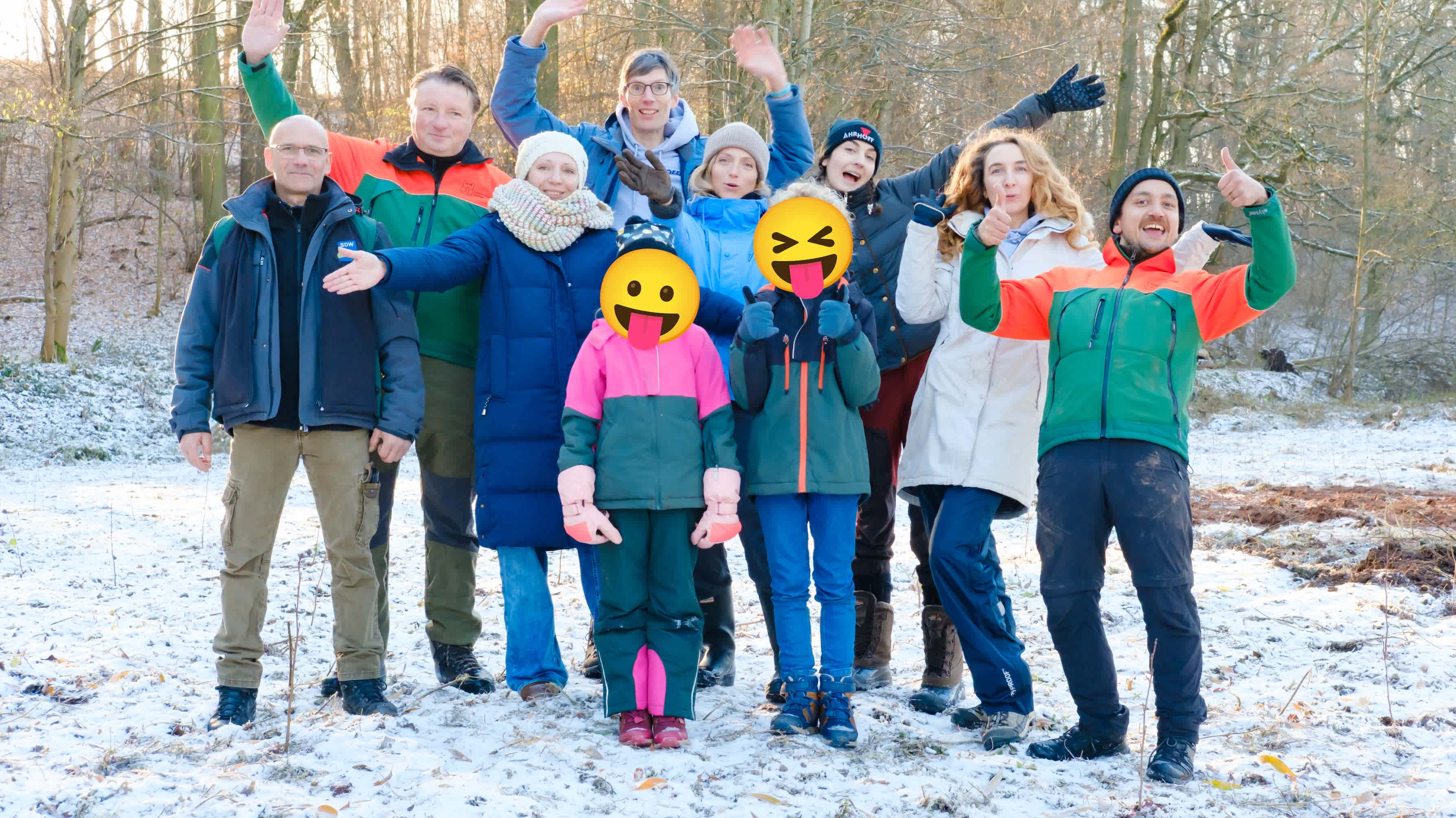
All volunteers are thrilled about a successful and fun reforestation day under the best conditions!