
Translated by Emma Finney
IPCC Report 2022 AR6: Summary Part 1
What does the IPCC Sixth Assessment Report say, why is it so alarming and can we stop the consequences of man-made climate change now? Here are the key messages of the IPCC 2022. We’ll start with Working Group 1, first part of the report.
The Intergovernmental Panel on Climate Change (IPCC) – often referred to as the “Intergovernmental Panel on Climate Change” – is an institution of the United Nations. On its behalf, experts around the world are compiling the current state of knowledge on climate change. It was founded in 1988 and in 2007 it even received a Nobel Peace Prize. Since then, everyone looks forward to the annual IPCC report. The Sixth IPCC Assessment Report (AR6) has just been published. This consists of three parts, which in turn consist of several more parts. Don’t worry, we will summarize the core messages of all three parts for you – in three blog articles.
Important: We have translated and summarized central messages from English. The complete scientific report, including references and additional graphics, can be found on the IPCC website.
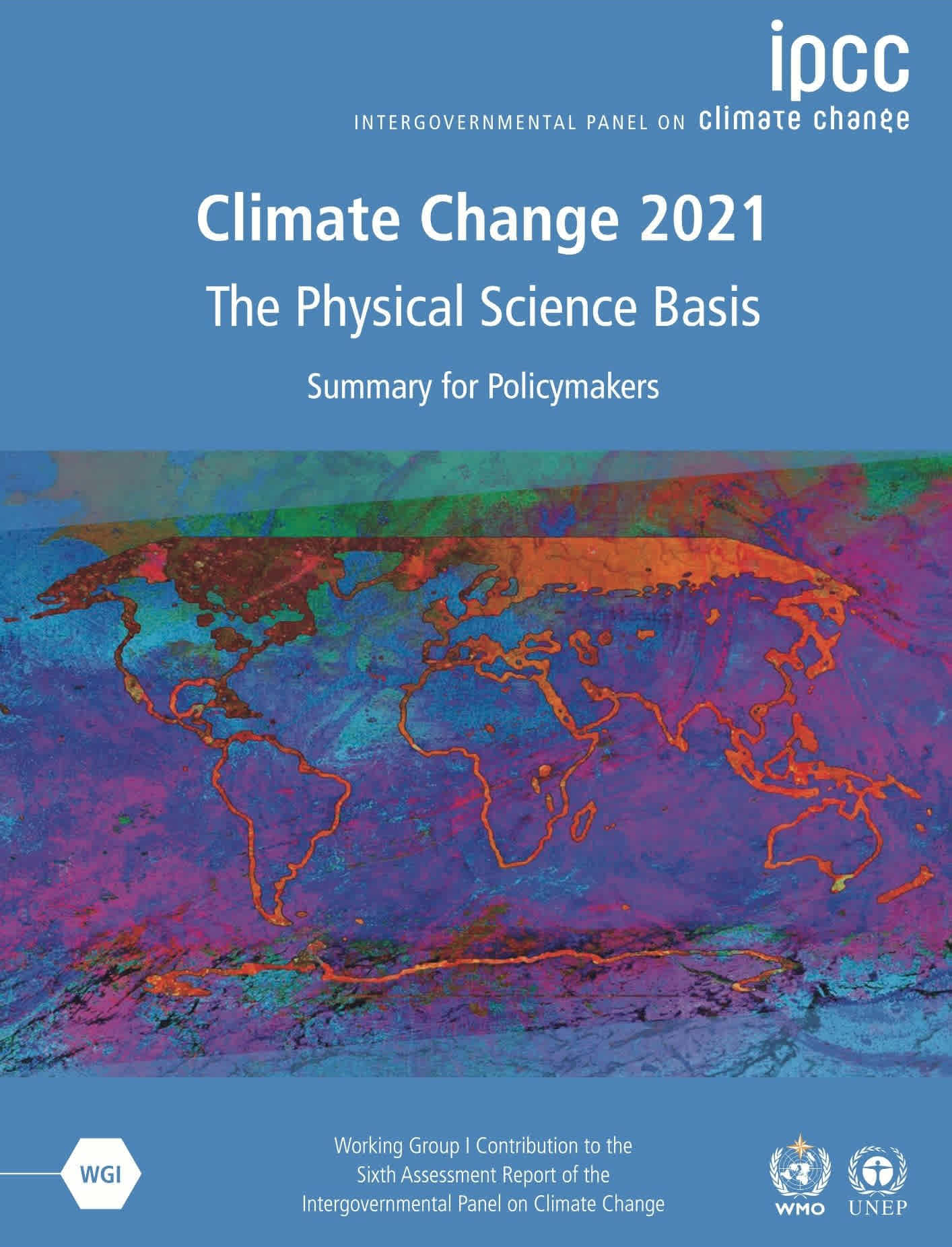
Here are the most important key messages of the IPCC 2022 I
It is undeniable that human influence on the climate has warmed our atmosphere – water and land. Far-reaching and rapid consequences for the atmosphere, oceans, cryosphere and biosphere have arisen.
- Each of the last four decades has been successively warmer than any previous decade since 1850.
- In 2019, atmospheric CO2 concentrations were higher than ever before in at least the last 2 million years. Concentrations of CH4 and N2O were higher than at any other point in time in at least 800,000 years.
- It is almost certain that man-made CO2 emissions are the main cause of the current global acidification of the open ocean at the surface.
- Human influence is most likely the main cause of the global retreat of glaciers since the 1990s and the retreat of thesurface of the Arctic sea ice between 1979–1988 and 2010–2019. The decrease was 40% in September and 10% in March.
- It has been practically proven that the upper ocean (0–700 m) has warmed since the 1970s. It is very likely that human influence is the main cause.
- The global glacier retreat since the 1950s, with almost all of the world’s glaciers retreating at the same time, is unprecedented in the last 2000 years.
Human-made climate change is already having an impact on many weather and climate extremes in all regions across the globe. Evidence of observed changes in extremes such as heat waves, heavy precipitation, droughts and tropical cyclones has increased.
- It is virtually certain that heat extremes have become more frequent and intense in most rural regions since the 1950s, while cold extremes have occurred less frequently and less severely. It is highly probable that man-made climate change is the main cause of these changes.
- It is likely that the global share of severe tropical cyclones (category 3 to 5) has increased over the past four decades.
- It is very likely that heavy precipitation events will increase and become more frequent in most regions with further global warming. On a global scale, it is projected that extreme daily precipitation events will increase by about 7% per 1°C of global warming.
- Many changes in the climate system are becoming greater in direct connection with increasing global warming. These include the increase in the frequency and intensity of extreme heat waves, marine heat waves, heavy precipitation and, in some regions, agricultural and ecological droughts; an increase in the proportion of intense tropical cyclones and a decline in Arctic sea ice, snow cover and permafrost.
Under all emission scenarios considered, the global surface temperature will continue to rise until at least the middle of the century. Global warming of 1.5°C and 2°C will be exceeded over the course of the 21st century unless CO2 and other greenhouse gas emissions are greatly reduced in the coming decades.
- Compared to 1850–1900, the global surface temperature is very likely to rise by 1.0°C to 1.8°C on average over the years 2081–2100 in a scenario with very low greenhouse gas emissions. With medium greenhouse gas emissions, the temperature will rise by 2.1°C to 3.5°C. In the scenario of very high greenhouse gas emissions, the increase will increase by around 3.3°C to 5.7°C. The last time the global surface temperature was 2.5°C or more above the 1850–1900 level was over 3 million years ago.
From a scientific point of view, limiting man-made global warming to a certain level requires a limit of cumulative CO2 emissions. At the minimum a net zero value for CO2 emissions must be achieved, together with a strong reduction in other greenhouse gas emissions.
- Achieving global net-zero CO2 emissions, where anthropogenic CO2 emissions are offset by anthropogenic co2 degradation, is a prerequisite for stabilizing the CO2-related increase in global surface temperature.
- If negative net CO2 emissions are achieved and maintained worldwide, the global CO2-related increase in surface temperature would gradually be reversed. But other climate changes will continue in their current direction for decades to millennia. For example, it would take several centuries to millennia for the rise of the global mean sea level to reverse, even with large negative net CO2 emissions.
Many changes due to past and future greenhouse gas emissions are irreversible over centuries to millennia – especially changes in the oceans, ice sheets and global sea levels.
- In the next 2000 years, the global mean sea level will rise by about 2 to 3 m if warming is limited to 1.5°C. It will rise by 2 to 6 m if it is limited to 2°C and by 19 to 22 m if heated to 5°C.
- In the period from 2011–2020, the Arctic sea ice area reached its lowest annual average level since at least 1850. In late summer, the Arctic sea ice surface was smaller than it had been for at least 1000 years.
- It is almost certain that mean global sea levels will continue to rise in the 21st century. Compared to 1995–2014, the likely rise in global mean sea level by 2100 is 0.28–0.55 m in the very low greenhouse gas emission scenario. In the scenario with average greenhouse gas emissions 0.44–0.76 m and 0.63–1.01 m according to the scenario with very high greenhouse gas emissions.
- In the longer term, due to the continued warming of the deep sea and the melting of ice sheets, sea levels will rise for centuries to millennia and will remain elevated for thousands of years.